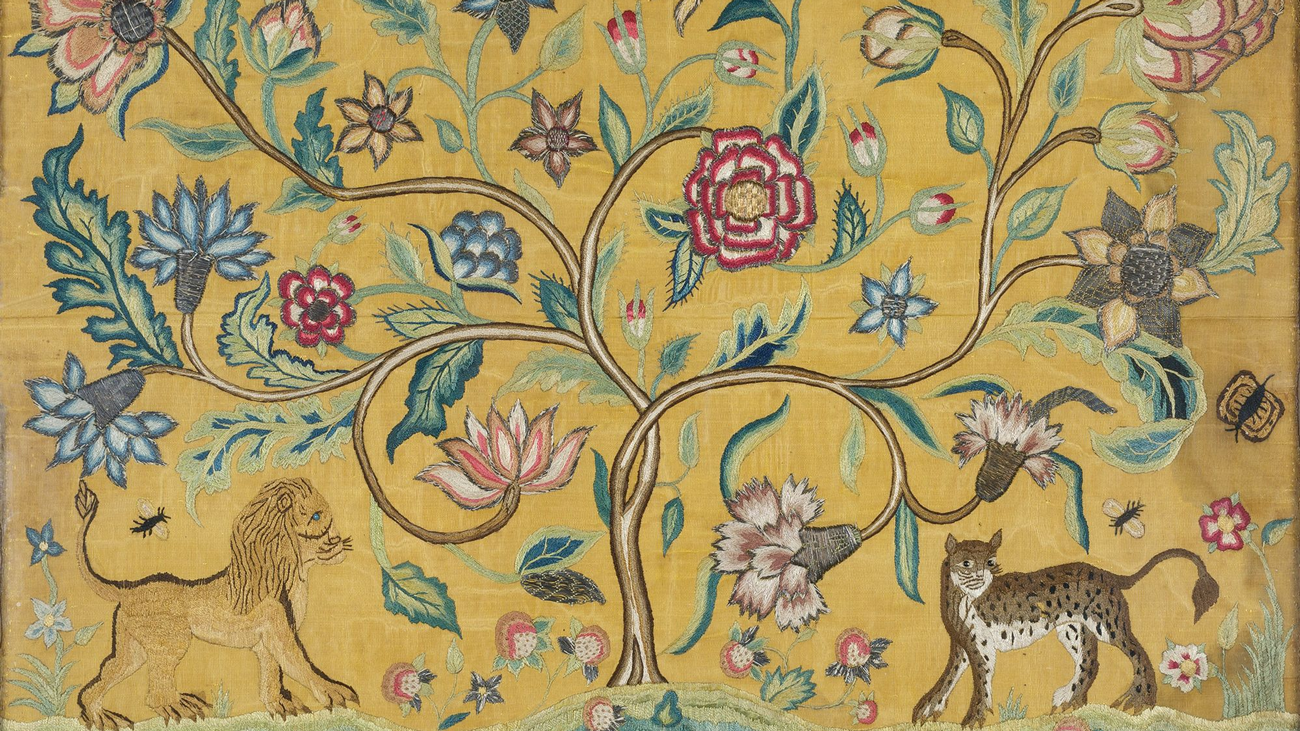
What can needlework, watercolors, and maps reveal about how young women saw the world around them? A new exhibition at the American Folk Art Museum (2 Lincoln Square, between West 65th and 66th Streets) explores that question through the art of American girls and young women in the eighteenth and nineteenth centuries.
On view through February 28, 2027, Locating Girlhood: Place and Identity in Early American “Schoolgirl” Art brings together nearly 100 works from museums and private collections across the United States and Canada. Featuring intricate needlework, samplers, watercolors, and maps, the exhibition shines a light on a rich but understudied genre known as “schoolgirl art.” The works depict settings ranging from pastoral landscapes and gardens to cityscapes, revealing how representations of place became a recurring theme in the art young women created as part of their education.
Rather than viewing these works solely as decorative objects or demonstrations of artistic accomplishment, Locating Girlhood examines them from an art historical perspective, exploring the role of place in young women’s artistic education. By highlighting the creative contributions of girls and young women, the exhibition expands the traditional narrative of American landscape art, which has long centered on male academic painters.
“We ask not only who created these works, but why girls made them and what they reveal about their lives and worlds,” added Emelie Gevalt, PhD, AFAM’s Deborah Davenport & Stewart Stender Deputy Director and Chief Curatorial and Program Officer.
Timed to coincide with the United States’ semiquincentennial, the exhibition examines the colonial and early federal ideas that shaped young women’s perspectives. It also highlights works by Black and Native American students alongside those of white students, offering a more inclusive view of early American schoolgirl art.
Among the highlights are Mary King’s Tree of Life, a needlework picture dating to 1754, and Gilbert Stuart’s double portrait of Anna Dorothea Foster and Charlotte Anna Dick, painted in 1790–91. Many of the works are rarely exhibited due to their fragility and sensitivity to light, giving visitors a special opportunity to experience these pieces firsthand.
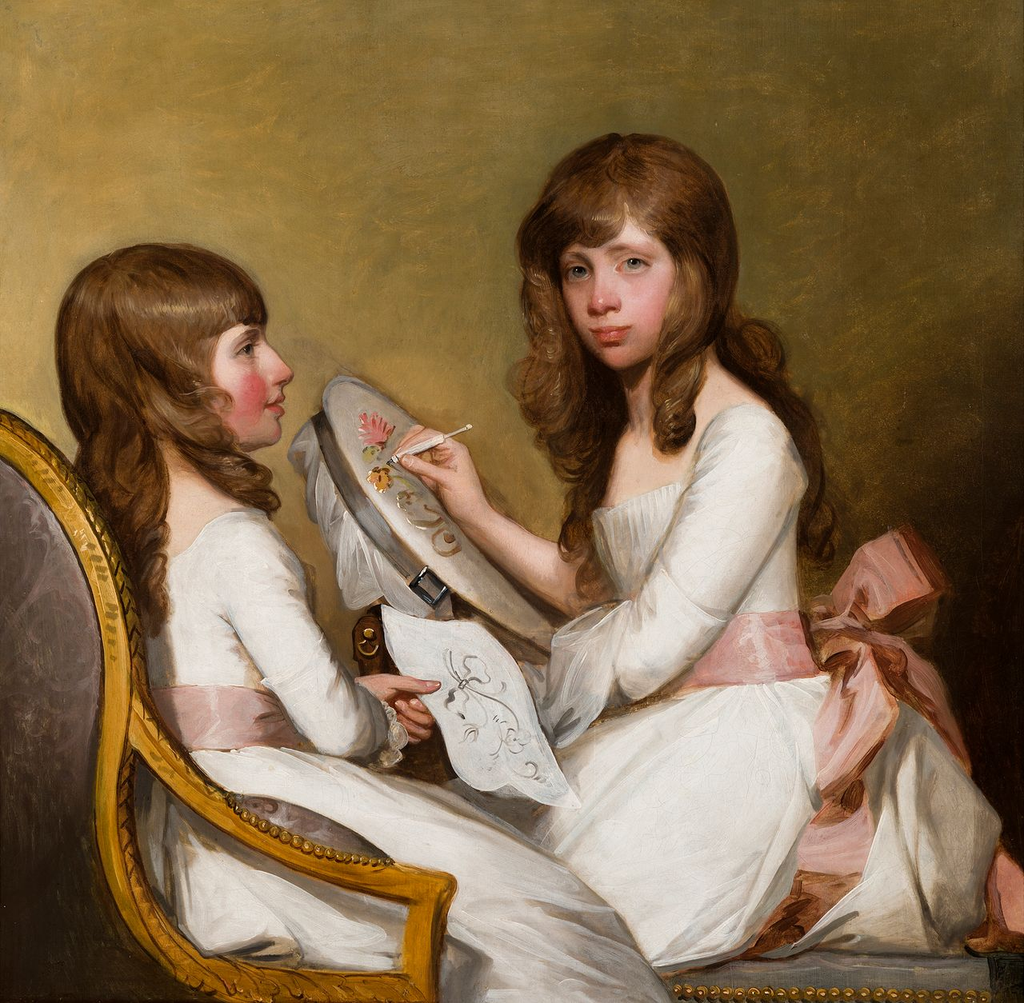
Anna Dorothea Foster and Charlotte Anna Dick
Dublin, Ireland
1790-1791
Oil on canvas
36 1/2 × 37 in.
Reynolda House Museum of American Art, Gift of Charlotte
Hanes in honor of Philip and Joan Hanes, 2019.2.1
Visitors can explore the exhibition further through a series of free public programs, including Dialogue + Studio: The Night School of Embroidery, a series of hands-on embroidery workshops on Thursdays, October 22, November 12, and January 21. Additional offerings include family artmaking programs, accessible tours, and The Subversive Stitch Revisited, a December 2 panel discussion exploring the relationships between stitching, gender, and emancipation.
Also on view through February 28, 2027, Folk Nation: Crafting Patriotism in the United States explores how Americans have used and preserved vernacular art to express ideas about their country, national identity, and history. Drawing from the museum’s collection, the exhibition offers another perspective on the objects that have shaped the American experience.
Admission is always free, making it an easy addition to a visit to Lincoln Square. While there, visitors can also stop by the museum shop to browse art-inspired gifts, books, and other unique finds.